Highlights
- Two summits for one expedition.
- One shared Markha Valley approach.
- Best value-per-summit in Ladakh.
Overview
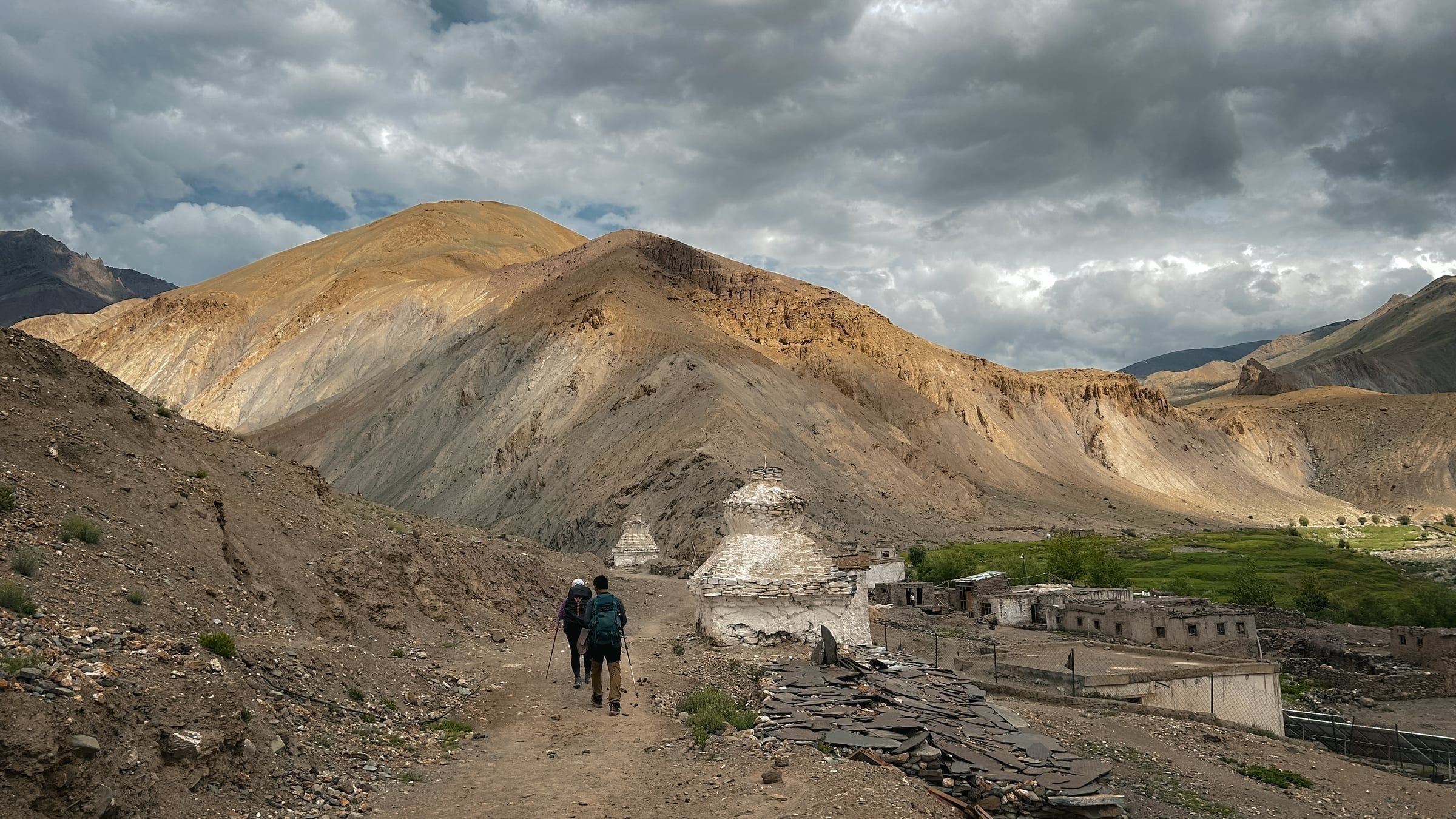
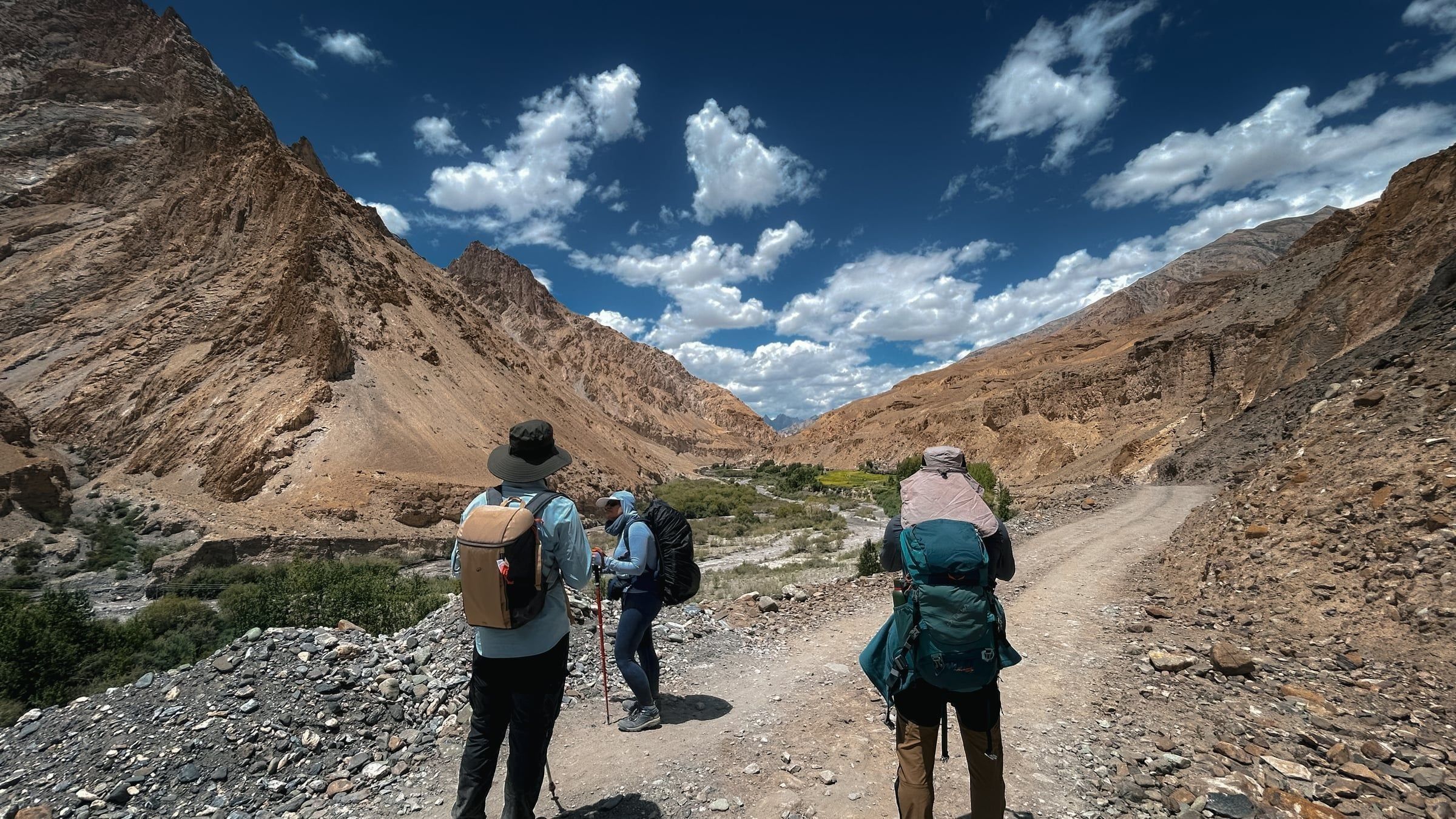
The Twin Peak expedition is a Markha Valley climb with two summits stacked back-to-back. After two nights in Leh to acclimatise, you drive to the road head and walk into the valley. Trail days carry you through Markha and Hankar villages to Kang Yatse base camp under the south face. A full rest-and-training day at base camp covers crampon fit, ice axe self-arrest, and fixed-rope ascent before the first summit. The KY2 attempt goes via the south-west ridge — a long snow slope topped by a short, fixed-rope summit pyramid. Back at base camp, you move across to Dzo Jongo base camp in the Nimaling area for the second summit attempt — a non-technical snow walk to a wide summit ridge. The descent crosses Kongmaru La (5,200m) — the highest pass in the Markha Valley — and drops to Chokdo for the drive back to Leh. Two buffer days are built in at the end for weather, summit re-attempts, or a delayed flight.
Who climbs with us
Twin Peaks is for climbers who want maximum summit time on a single Ladakh trip — KY II followed by Dzo Jongo, with the buffer days a single peak alone wouldn't justify. Recent batches have been a mix of first-time 6,000ers willing to put in the 8+ weeks of training, and second-time TVT climbers stretching beyond a single-summit trip. The two-summit window stacks fatigue, so the climbers who do well are the ones who train and listen to the guides on rest-day calls.
Itinerary
11 days, Leh to Leh.
-
Day 1 Arrival at Leh
3,500mFly into Leh in the morning. Take it slow — altitude hits even seasoned trekkers. Hydrate, rest, light meals. Welcome briefing in the evening.
-
Day 2 Acclimatisation at Leh
3,500mEasy acclimatisation walk in Leh. Final gear check and expedition Q&A. Early dinner, full rest.
-
Day 3 Drive till road head, trek to Markha
3,800mDrive from Leh to the trek road head. Cross into the Markha Valley and walk to Markha village — the largest in the valley. First night on the trail.
-
Day 4 Markha to Hankar
3,950mWalk along the Markha river through small Buddhist hamlets to Hankar — the last village before the high meadows. Watch for blue sheep and lammergeier on the cliffs above the trail.
-
Day 5 Hankar to Base Camp
4,900mClimb onto the high pasture and continue to Kang Yatse base camp under the south face. Establish camp; rest the afternoon.
-
Day 6 Rest and training day
4,900mSkills clinic at base camp: crampon fit, ice axe self-arrest, fixed-rope ascender technique. Short acclimatisation walk in the afternoon. Summit briefing in the evening, sleep early.
-
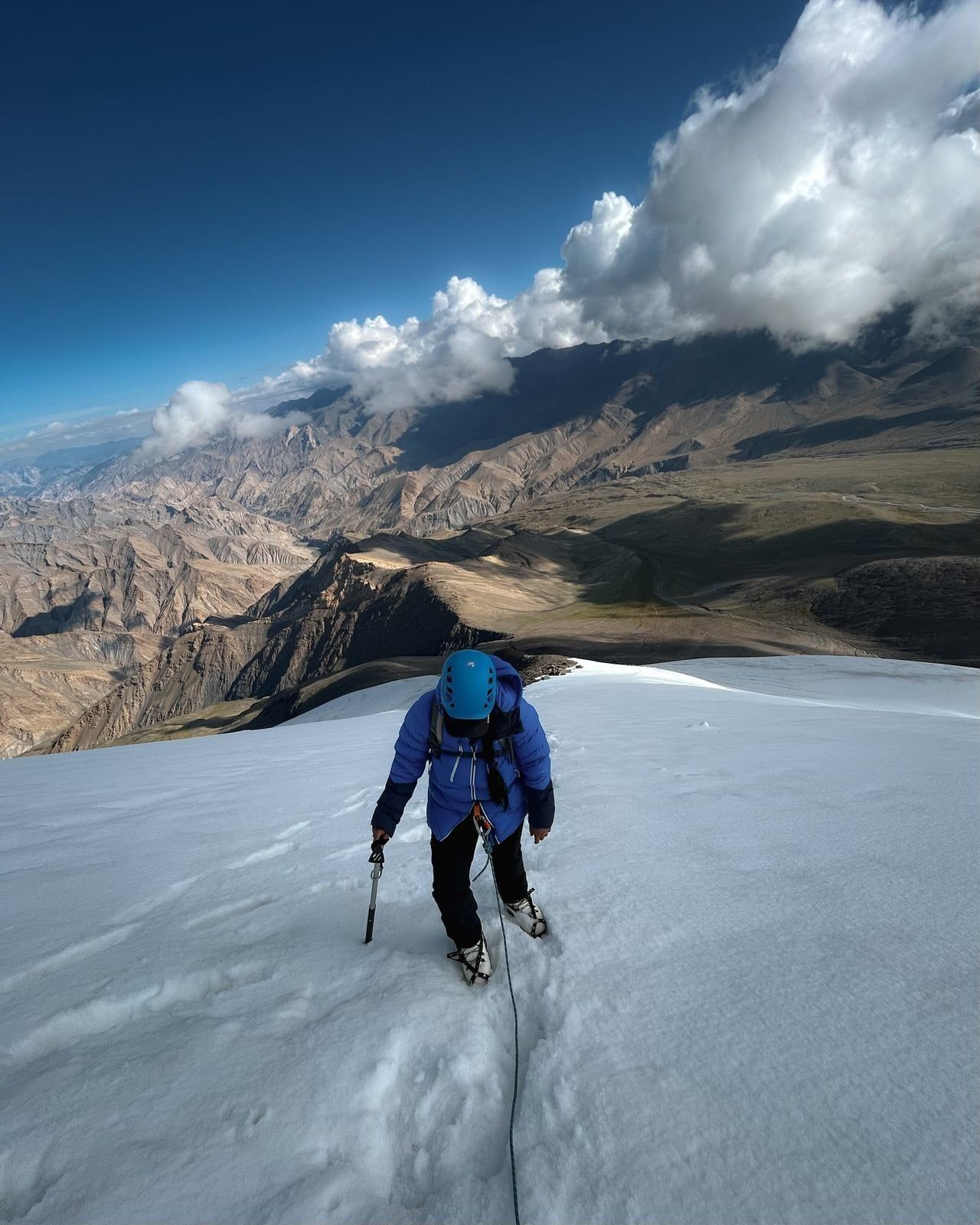
Day 7 Summit attempt — Kang Yatse II (6,250m)
6,250m summit, return to base campPre-dawn start with headlamps. Cross moraine, rope up at the glacier toe. Steady snow ascent to the summit pyramid. Fix rope on the final ridge. Summit, then long descent back to base camp by mid-afternoon.
-
Day 8 Move to Dzo Jongo Base Camp
4,800mPack up Kang Yatse base camp and move across to Dzo Jongo base camp in the Nimaling area. Short day; afternoon for rest and acclimatisation. Summit briefing in the evening.
-
Day 9 Summit attempt — Dzo Jongo East (6,217m)
6,217m summit, return to base campPre-dawn start. Walk up moraine and onto the broad snow slope above. The route is non-technical — crampons and ice axe, no fixed ropes — to a wide summit ridge. Summit, then descent back to base camp by midday.
-
Day 10 Dzo Jongo Base to Chokdo via Kongmaru La, drive to Leh
5,200m pass, 3,800m road headClimb to Kongmaru La — the highest pass in the Markha Valley — and descend the gorge to Chokdo. Vehicle waiting; drive to Leh. Hot shower, real bed, group dinner.
-
Days 11–12 Buffer days
3,500mTwo contingency days held back for weather, summit re-attempts, or a delayed flight in/out of Leh. If unused, extra days in Leh at no additional cost — bazaar, monasteries, café fix.
What's included
Included
- Transport — Leh to last roadhead and Chokdo to Leh
- Accommodation — stay from Day 1 to last day in Leh (sharing)
- Food — all meals from Day 3 lunch to lunch on the last day
- Permits — all trekking permits and camping charges
- Trekking and safety equipment — tents, sleeping bags, and technical equipment
- Certified trek leaders, guides, and support staff
Not included
- Backpack offloading charges
- Any kind of personal insurance and rescue expenses
- Meals during Leh stay and road journey
- Personal expenses of any kind, and anything apart from the inclusions
- Emergency evacuation and hospital charges
Dates & availability
No fixed dates yet — get in touch for the next Mid-Jul – Mid-Sep batch or private/custom dates.
We haven't opened a public batch for this expedition yet. Reach out and we'll share the next departure as soon as it's confirmed, or set up a private group on dates that suit you.
Need different dates? Private departures are possible through Mid-Jul – Mid-Sep with a minimum of 4 climbers — message us on WhatsApp.
Your guides
Subodh Bhadauriya ITRA
Lead Expedition Guide · 8+ years
Long-distance hiker, trail runner, and occasional poet — at home in the Himalaya.
Frequently asked
What is the Twin Peak Expedition?
A 12-day Leh-to-Leh expedition that climbs two Ladakh 6,000ers — Kang Yatse II (6,250m) and Dzo Jongo East (6,217m) — sharing one Markha Valley approach. The Vertical Tribe runs it with two acclimatisation nights in Leh, the Markha approach to Kang Yatse base camp, the KY2 summit, a move to Dzo Jongo base camp at Nimaling, the Dzo Jongo East summit, descent over Kongmaru La, and two buffer days for weather.
How does the Twin Peak Expedition differ from the Kang Yatse II standalone?
The KY2 standalone is a 9-day single summit at ₹54,000. Twin Peaks adds three days and ₹21,000 (₹75,000 total) and gives you a second 6,000m summit (Dzo Jongo East, 6,217m) on the same trip. Instead of starting your descent on Day 8, you move from Kang Yatse base camp to Dzo Jongo base camp and attempt the second summit on Day 9.
Which peak is harder, Kang Yatse II or Dzo Jongo East?
Kang Yatse II is the harder of the two — Alpine PD+ with a fixed-rope summit ridge. Dzo Jongo East is a non-technical PD-grade snow walk-up with a wide summit ridge. We climb KY2 first while you are freshest, then Dzo Jongo East once you are fully acclimatised.
What's the best time to climb the Twin Peaks?
Mid-July to mid-September. Peak conditions are late July to late August: stable weather, hard snow on both summit slopes, and dry approach trails.
How much does the Twin Peak Expedition cost?
TVT's 2026 Twin Peak Expedition is ₹75,000 per climber, Leh-to-Leh, covering transport, accommodation, all meals from Day 3 lunch to the last day, all trekking permits and camping charges, technical and safety equipment, and certified guides. Personal insurance, rescue expenses, meals during Leh stay, and personal expenses are not included.
Do I need a permit for the Twin Peaks?
All trekking permits and camping charges are included in your expedition fee and handled by TVT. No Inner Line Permit is required for Indian nationals. Foreign nationals require additional IMF surcharges and a liaison officer for both peaks — please reach out 90 days before departure.
Is the Twin Peak Expedition open to foreign nationals?
Yes, with prior arrangement. Foreign climbers need IMF royalties for both peaks and a mandatory liaison officer. Reach out 90 days before departure.
How fit do I need to be?
Run 5 km in under 35 minutes, walk 10 km with an 8 kg pack without strain, and complete a focused 8–12 weeks of cardio and leg-strength work before departure. A two-summit window stacks fatigue across days, so go in fitter than you would for a single 6,000er.
What gear do I need to bring?
Personal: B2-rated mountaineering boots (broken in), down jacket, base + mid-layers, gloves (light + heavy), headlamp, glacier sunglasses. Technical climbing gear, tents, and sleeping bags are provided. Full personal-gear checklist shared after enquiry.
What happens if weather turns on a summit day?
Two buffer days are built into the itinerary — twice the headroom of a single-summit expedition. The lead guide makes the final call. We turn around if conditions don't support a safe attempt and re-attempt with the buffer days. If both buffer days are weathered out, we descend with whatever summits we got. Mountains decide; we don't fabricate success rates.
What's the cancellation policy?
More than 60 days before departure: full refund. 60 to 30 days before departure: 50% refund. Less than 30 days before departure: no refund.