
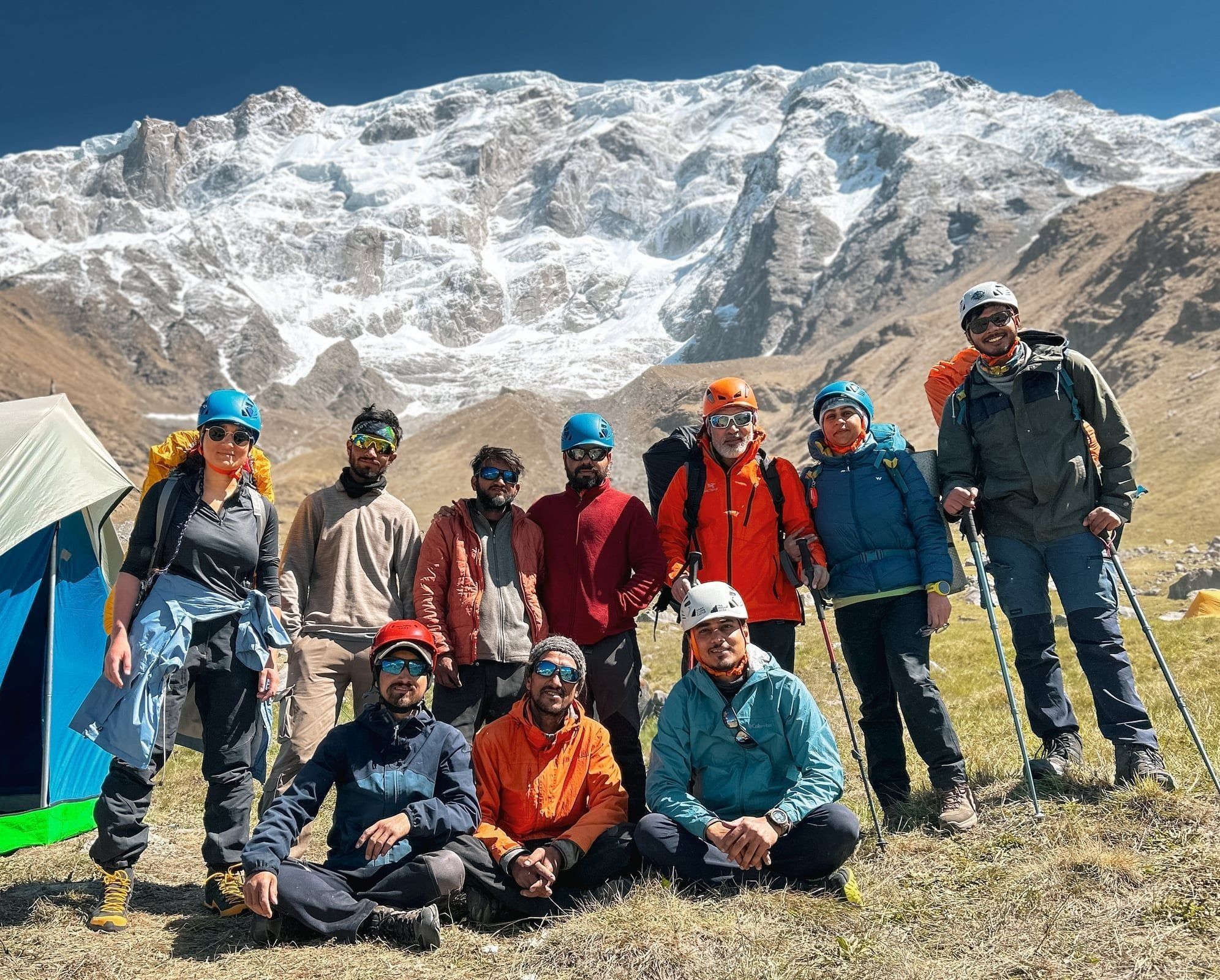
Black Peak
Expedition
Climb one of the most stunning 6,000m peaks in the Indian Himalayas
What is Black Peak?
Black Peak, locally known as Kalanag or Kala Nag (meaning "Black Snake" due to its serpentine ridgeline), stands at 6,387m (20,955 ft) as the highest peak in the Bandarpunch Massif and Saraswati Range of the Garhwal Himalayas.
First summited in 1955 by Jack Gibson and students of the prestigious Doon School, Dehradun, Black Peak has since become one of the most sought-after introductory mountaineering peaks in India. It offers the perfect blend of technical challenge and achievable difficulty for aspiring mountaineers.
The expedition takes you through the pristine Govind Wildlife Sanctuary, past the emerald waters of Ruinsara Lake, and across glaciers that offer panoramic views of Swargarohini, Bandarpunch, and the greater Himalayan range.
What Sets Us Apart
We don't just lead expeditions—we create transformative mountain experiences with an unwavering commitment to safety and success.
High Success Rate
Our methodical acclimatization approach and experienced decision-making deliver consistently high summit success rates.
Expert Guides
All expedition leaders hold Advanced Mountaineering certifications with extensive Himalayan experience and wilderness first aid training.
Safety First
Comprehensive safety protocols, emergency oxygen, satellite communication, and evacuation plans ensure you're in safe hands.
Small Groups
Maximum 12 climbers per expedition ensures personalized attention, better acclimatization monitoring, and stronger team bonds.
Quality Equipment
All technical gear including ropes, harnesses, ice axes, and crampons provided. We use only tested, reliable equipment.
The Tribe Community
Join a community of passionate mountaineers. Our expeditions forge lasting friendships and memories that go beyond the summit.
Detailed Itinerary
15 days of adventure from Dehradun to the summit of Black Peak and back
Dehradun to Sankri
Begin your journey from Dehradun early morning. Drive through the scenic Mussoorie-Purola-Mori route, passing through dense forests and small Himalayan villages. Arrive at Sankri, a beautiful village that serves as the gateway to many Himalayan treks. Overnight stay in homestay.
Drive to Taluka & Hike to Devsu
Drive from Sankri till the last possible motorable point at Taluka. Begin the trek through oak and rhododendron forests. The trail offers glimpses of snow-capped peaks. Reach Devsu Thatch, a beautiful meadow surrounded by dense forests. Set up camp and acclimatize.
Devsu to Ruinsara
Trek alongside the Ruinsara Gad through alpine meadows and birch forests. Arrive at the stunning Ruinsara Lake, a glacial lake reflecting the surrounding peaks. The campsite offers spectacular views of the Bandarpunch range.
Ruinsara to Kyarkoti (BC)
Ascend through moraines and boulder fields towards Kyarkoti, the expedition's base camp. The landscape transitions from alpine meadows to rocky terrain. Establish base camp with views of Black Peak dominating the horizon.
Acclimatization & Technical Training
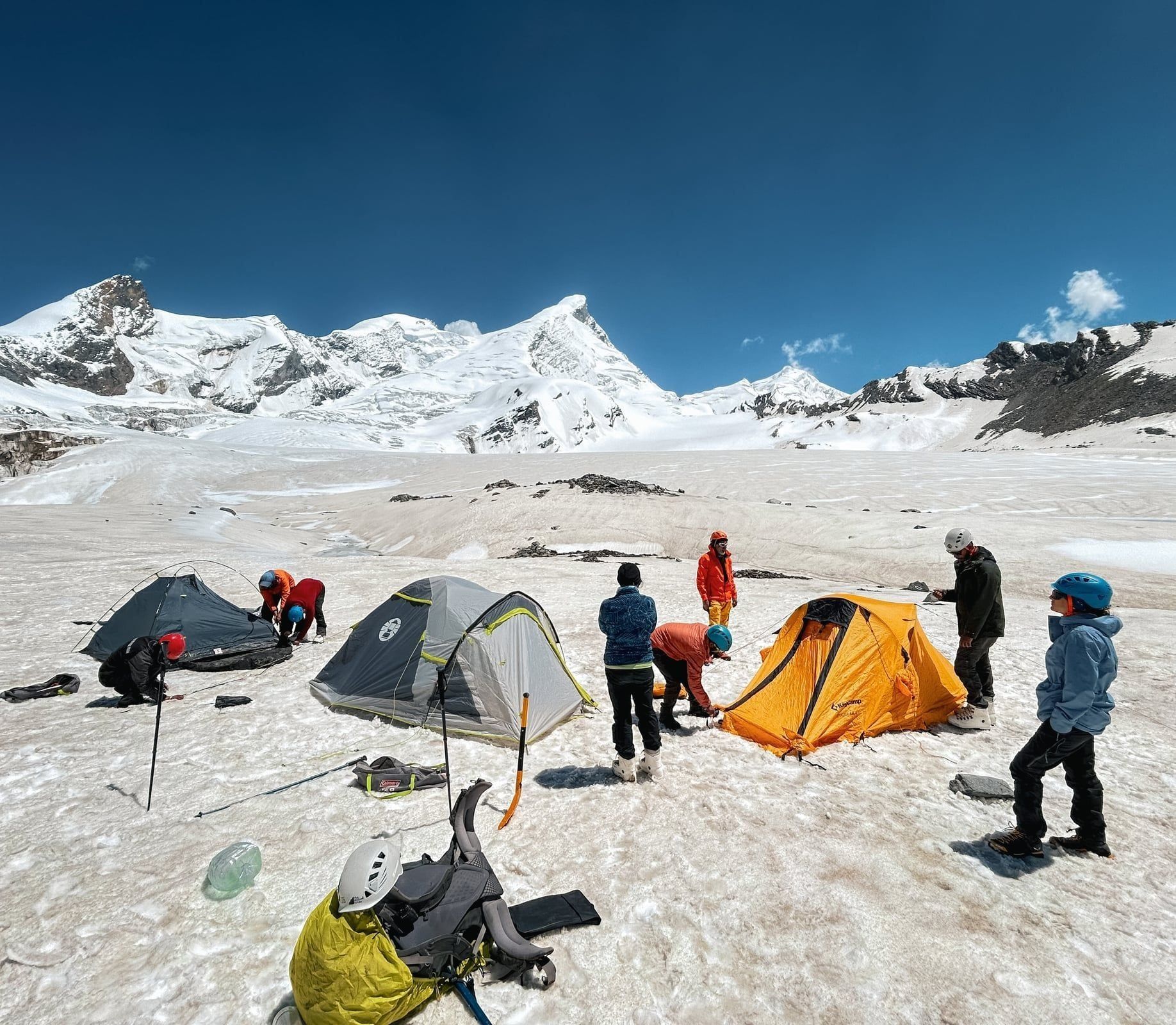
Critical acclimatization day at base camp. Conduct technical training sessions including ice axe arrest, crampon techniques, rope work, and glacier travel safety. Short acclimatization hike to higher altitude. Rest and prepare equipment.
BC to ABC (Load Ferry)
First load ferry to Advanced Base Camp (ABC). Carry equipment and supplies to establish the higher camp. Return to base camp for the night. This rotation helps with acclimatization.
BC to ABC (Move)
Move to Advanced Base Camp with remaining equipment. The route crosses initial glacier sections. Establish ABC and prepare for the next phase of the expedition.
ABC to Camp 1 (Load Ferry)
Load ferry to Camp 1 through crevassed glacier terrain. Navigate around seracs and ice formations. Practice rope techniques on the glacier. Return to ABC.
Move to Camp 1
Move to Camp 1 with remaining supplies. The route requires careful glacier navigation. Prepare for the summit push and review the route ahead.
Camp 1 to Summit Camp
Establish summit camp on the upper glacier. The terrain becomes steeper with technical sections. Early dinner and rest. Summit briefing and equipment check.
Summit Attempt - ABC
Start at 2 AM with headlamps. Navigate the 75-foot ice wall with fixed ropes. Push through snow slopes to reach the summit ridge. Summit Black Peak at sunrise with 360° panoramic views of Swargarohini, Bandarpunch, and distant peaks. Descend carefully to ABC.
ABC - Base Camp/Ruinsara
Descend from ABC through base camp to Ruinsara. Celebrate the successful summit with the team. The descent offers different perspectives of the terrain covered.
Back to Seema/Sankri
Final trek day descending through Devsu. Depending on conditions, trek to Seema or continue to Sankri. Farewell to the mountains and return to the village. Certificate distribution and expedition wrap-up.
Buffer Days
Reserved for weather delays or rest. If not needed for the expedition, these days can be used for exploring Sankri village, additional rest, or departure to Dehradun. Drive back to Dehradun when expedition concludes.
15-day all-inclusive expedition • No hidden costs
Everything You Need
Upcoming Dates
Limited to 12 climbers per batch. Book early to secure your spot.
Gallery
Real moments from The Vertical Tribe's Black Peak expeditions
Frequently Asked
How difficult is the Black Peak expedition?
Black Peak is rated as a Difficult expedition. It involves a 75-foot vertical ice wall with a 70-degree gradient, glacier crossings, and high-altitude camping above 5,000m. Prior high-altitude trekking experience (like Roopkund, EBC) is recommended, though not mandatory if you have excellent fitness.
What is the best time to climb Black Peak?
The best seasons are May-June (pre-monsoon) and September-October (post-monsoon). May-June offers stable weather and good snow conditions for climbing. September-October has clearer skies and stunning autumn colors, though temperatures are colder.
Do I need previous mountaineering experience?
While not mandatory, previous high-altitude trekking experience is strongly recommended. You should have completed at least one trek above 4,000m. We provide comprehensive technical training during the expedition including ice axe use, crampon techniques, and rope work.
What fitness level is required?
You should be able to run 5 km in under 30 minutes and trek 8-10 km daily with a 10 kg backpack. Start training 2-3 months before the expedition with cardio, strength training, and hiking with weight.
What happens if weather prevents the summit attempt?
We have 2 buffer days built into the itinerary for weather delays. If conditions don't permit a safe summit attempt, the team leader will make the final call. Safety is always our priority. Refunds for weather-related cancellations follow our cancellation policy.
Is the expedition suitable for solo travelers?
Yes! Many of our participants join solo and leave as friends. The expedition creates strong bonds through shared challenges. We ensure comfortable group dynamics and tent sharing arrangements.
What technical equipment do I need to bring?
All technical climbing equipment is provided including harness, helmet, crampons, ice axe, ascender, and carabiners. You need to bring personal gear like trekking boots, warm layers, and sleeping bag liner (optional).
How do I reach Dehradun for the expedition?
Dehradun is well-connected by train (Dehradun Railway Station) and air (Jolly Grant Airport). You can also take overnight buses from Delhi. We recommend arriving a day early to account for travel delays.
What are the permit requirements for foreign nationals?
Foreign nationals require additional IMF (Indian Mountaineering Foundation) permits costing approximately USD 500-800, plus a mandatory Liaison Officer. They must have prior experience climbing a 6,000m+ peak. Contact us for detailed requirements.
Ready to Summit Black Peak?
Join The Vertical Tribe and become part of our 80%+ summit success story. Your Himalayan adventure awaits.